
History of Bir Raja
Rajnagar, in the Birbhum district of West Bengal, was once an important political centre and the capital of a local kingdom. Its history is associated with the Bir Rajas, a line of Hindu rulers, and later with the Pathan rulers known as the Nagar Raj. The history of this region reflects centuries of changing kingdoms, military conflicts and political power.
1. Who was Bir Raja?
According to historical accounts and local tradition, Bir Singh (also associated with the title Bir Raja) was an early Hindu ruler connected with Rajnagar. The surrounding region was ruled by local chiefs, and Rajnagar became an important seat of power in western Birbhum.
Some local accounts also associate the Bir Rajas with the history of the name Birbhum. However, the precise genealogy and dates of the earliest rulers are not firmly established in the surviving historical records.
2. The early history of Rajnagar
Before the 13th century: Local Hindu chiefs held power in parts of western Birbhum.
Around 1206–1211: Rajnagar came under the influence of forces associated with Muhammad Bakhtiyar Khalji's expansion into Bengal. Historical accounts mention Muhammad Shiran and Ali Mardan in connection with the conquest of the area.
After the conquest: Muslim political control over western Birbhum appears to have remained limited for long periods, allowing local Hindu chiefs known as the Bir Rajas to continue exercising authority.
According to local tradition, a major change occurred around 1600 AD. A Pathan commander named Jonad Khan, also spelled Joned Khan, reportedly gained the confidence of the Bir Raja and later took control of the kingdom. The traditional account says that the Raja was killed through a conspiracy involving Jonad Khan and the queen.
Jonad Khan's son, Bahadur Khan, is associated with the establishment of the later ruling house known as Nagar Raj. This story is an important part of Rajnagar's local heritage, although individual details should be treated as traditional accounts rather than independently verified facts.
4. The rise and fall of Nagar Raj
After the rise of the Pathan ruling family, Rajnagar became known as Nagar Raj. Its rulers maintained relationships with the Nawabs of Bengal and the Mughal authorities.
The kingdom reached a significant period of power under Asad-uz-Zaman Khan, who ruled from 1752 to 1777. However, conflict with the British and the forces associated with Mir Qasim weakened the kingdom. Following military defeats in the 1760s, the rulers lost much of their political independence. By the early 19th century, Rajnagar's former royal centre had largely declined.
5. Historical remains you can explore today
Some of Rajnagar's surviving heritage includes:
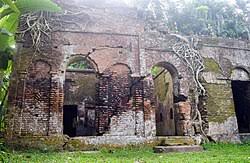
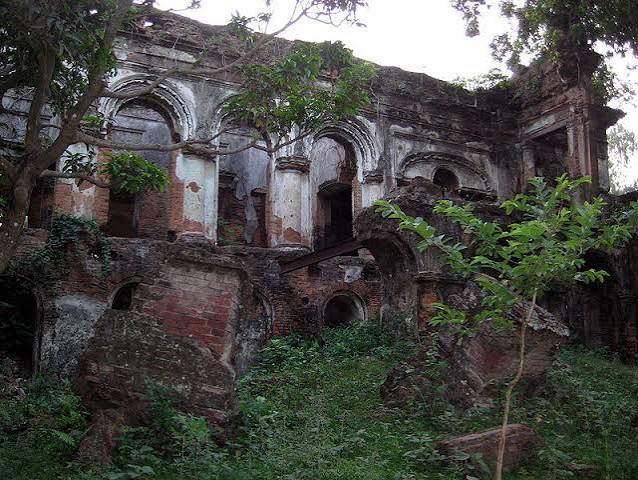
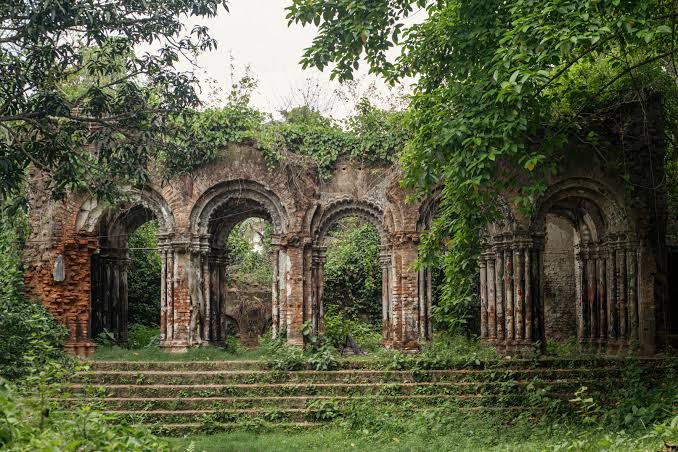
Rajbari ruins: Remains associated with the old royal palace.
Kalidaha: A historic pond near the former royal complex.
Motichur Mosque: A historic mosque noted for its architectural details.
Imambara and other old structures: Remnants connected with Rajnagar's later ruling period.
Conclusion
The history of Bir Raja is an important part of Birbhum's cultural heritage. Rajnagar witnessed the rule of local Hindu chiefs, the rise of the Pathan rulers, the influence of the Mughals and the expansion of British power. Its surviving ruins preserve memories of a time when Rajnagar was a major centre of regional authority.
Historical reference: Official Birbhum District History and Rajnagar Mahavidyalaya's history of Rajnagar.
Would you like the complete history of Bir Raja in Bengali, including the traditional story of the king, the queen, Jonad Khan and the old Rajbari?